Why governance, Layer‑2 scaling, and DEX design will decide the future of derivatives
Whoa! Traders smell opportunity fast. My instinct said this market was far from boring, and that feeling stuck. Initially I thought governance was just a sidebar, but then I watched users vote and markets move, and I changed my mind. On one hand governance can be messy; though actually that mess creates resilience that centralized ops rarely show.
Here’s the thing. Derivatives markets are about leverage, settlement finality, and counterparty risk. They reward precision and punish ambiguity. So when a decentralized exchange handles margin and liquidations, its governance and scaling choices become very very important. I’m biased toward systems that put risk controls close to the protocol, not buried behind PR teams.
Seriously? Yes. When an order book blinks and funding rates swing, you want governance that can react without breathing room delays. That means fast proposals, clear decision rights, and a community that actually reads the proposals. On the other hand, too much speed can be reckless, and actually wait—speed without expertise is dangerous. My gut said speed matters, but not at the expense of safety nets.
So where do Layer 2s fit in? They act like express lanes for trade execution and settlement, lowering costs and improving throughput. That solves latency and gas problems that used to strangle on chain derivatives. But scaling is not a silver bullet; it shifts the debate toward tradeoffs between decentralization, sovereignty, and upgradeability. (oh, and by the way… some tradeoffs are subtle.)
Check this out—design choices cascade. Governance influences risk parameters which shape user behavior, which in turn affects liquidity and market depth. Medium sized changes in oracle cadence can amplify into large funding shocks. This is why the architecture matters as much as the UI, even though most traders care about the UI first.

Governance: not a checkbox but the core risk protocol
I’ll be honest, governance often reads like legalese. It rarely excites traders until something breaks. Yet governance is the mechanism that sets maintenance margins, liquidation incentives, and oracle thresholds. Those three levers determine who survives a cascade and who gets wiped out. Initially I thought token-weighted votes would be enough, but then I saw coordination failures and realized mixed models perform better.
Really? Yes. Hybrid systems that combine token voting with specialized committees and emergency pause powers can act faster while preserving decentralization. That said, emergency powers can be abused, and so the design must include accountability and clear sunset clauses. My experience shows that communities that invest in proposal literacy avoid foolish shortcuts.
On a practical level, good governance needs: clear proposal templates, simulation tooling for economic effects, and transparent upgrade paths. Also, reproducible on chain snapshots and timelocks protect users from surprise changes. Those protections help build trust, which feeds deeper liquidity. Trust is currency in markets; remember that.
Something felt off about naive “decentralize everything” slogans. True decentralization without expert guardrails is sometimes a recipe for paralysis. So some degree of delegated responsibility, with rotation and slashing, can keep the protocol nimble. I’m not 100% sure of the right balance, but patterns are emerging in live networks.
Now, traders care about two tangible things: predictability and cost. Governance that moves parameters unexpectedly destroys predictable P&L. Predictable governance means fewer black swan governance events and smoother hedging strategies. That’s why traders prefer frameworks where changes are signaled well in advance.
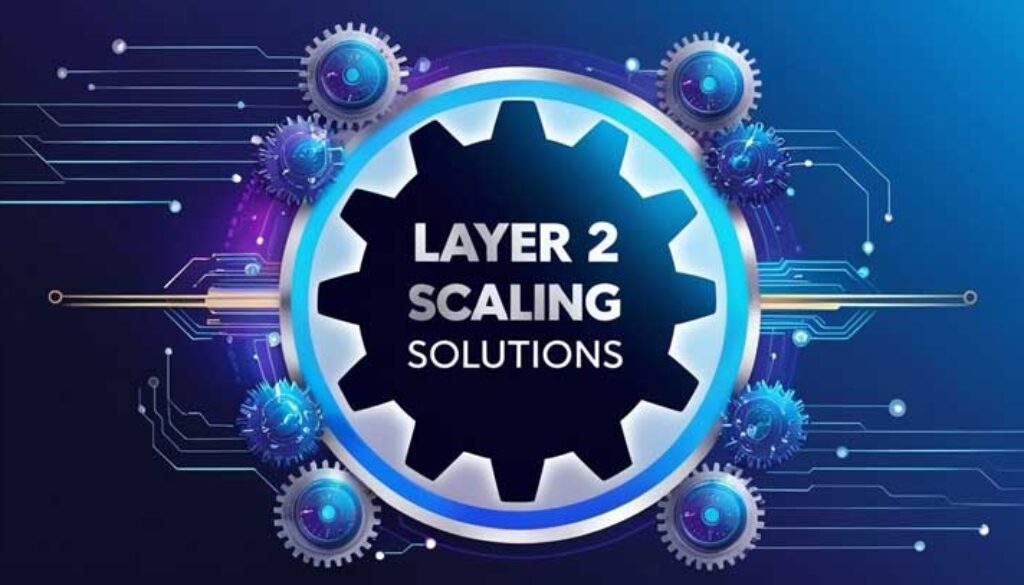
Layer 2 scaling: where performance meets protocol safety
Hmm… scaling tech can be boring to explain, but the impact is visceral. Lower fees mean you can trade smaller sizes and make markets tighter. That matters for retail and professional market makers alike. Layer 2s—whether optimistic, zk, or sovereign rollups—offer different security and upgrade models, so the choice matters a lot.
On one hand, zk rollups give strong cryptographic assurances about state correctness. On the other hand optimistic rollups trade verification delays for simpler tooling and faster innovation. Though actually, the ecosystem is converging toward hybrid solutions that try to capture both benefits. My impression is that derivatives venues will prefer solutions with minimal finality lag.
Execution layer design also affects margining style. If settlement is near instant, cross margining setups become practical and capital efficient. If not, you end up with segregated margin and higher capital costs. That difference changes real economics for traders and liquidity providers—it’s not a theoretical argument.
Remember the user experience. Traders expect sub second confirmations and predictable fees. If a Layer 2 enables that while preserving security, adoption accelerates. But note: faster does not equal safer. There must be robust fraud proofs, well tested upgrade mechanisms, and clear migration plans. Otherwise you bake systemic risk into speed.
Okay, so check this out—some chains aim to be “sovereign L2s” that own their security model. That’s powerful, however it moves the governance conversation from the base layer to the chain itself, and with that shift comes responsibility. You now need validators, slashing rules, and cross chain bridges that don’t leak funds like a sieve. Bridging is the usual Achilles heel.
DEX design: order books, AMMs, and derivatives mechanics
Derivatives DEXs are not simple AMMs. They need price oracles, margin engines, and liquidation mechanics. Each piece has to be auditable and governed. A messy liquidation design can create cascading liquidations, and that can wipe liquidity providers too. That part bugs me—liquidations are where socialized losses become ugly.
There are multiple design patterns: perpetuals on order books, automated market maker-based derivatives, and hybrid models that layer off chain matching with on chain settlement. Each approach changes the role of governance. For instance, on chain order books require more frequent parameter adjustments, while AMM derivatives lean on curve design and fee schedules.
Traders want low slippage, deep liquidity, and consistent funding rates. Protocol designers want safety and skew controls. These objectives collide, and governance is where compromises get hammered out. I’m biased, but I think modular designs that let governance tweak risk modules independently work best in practice. They isolate havoc.
On oracles: they are the unsung governance battleground. Oracle frequency, fallback mechanisms, and aggregation rules must be explicit and upgradeable. If you rely on a single data provider or a fragile relay, expect surprises. Diversification and decentralized data sourcing reduce tail risk, though they add complexity and sometimes latency.
Something to remember—user incentives shape protocol evolution. Liquidity mining, fee rebates, and insurance funds all require clear social contracts. If incentives are opaque, whales will game the system and smaller traders lose faith. That feedback loop can hollow out a DEX fast.
Practical checklist for traders and investors
Alright, here are pragmatic signals to watch before you put capital down. First, governance clarity—look for defined proposal cadences, emergency pause powers, and explicit upgrade gates. Second, Layer 2 security—understand trust assumptions and finality timing. Third, liquidation and margin rules—simulate worst case scenarios and check historical stress tests.
Also inspect the community. Is there developer activity? Are independent audits public? Does the protocol publish simulations of parameter changes? Community competence matters nearly as much as code. A noisy but engaged community can catch problems early. A silent one probably won’t.
Want a quick resource? Visit the dydx official site for product details and governance docs. That link leads to primary materials where you can read the proposals yourself and see how the team communicates. Don’t rely on summaries; read the chairs, the proposals, and the on chain votes when you can.
I’m not here to give investment advice, but I am urging caution. Protocols with clear governance primitives, layered security, and modular risk controls tend to weather storms better. Still, nothing is risk free, and diversifying across strategies remains prudent. Your capital deserves respect.
FAQ
How fast should protocol governance act during crises?
Fast enough to prevent systemic runs, but slow enough to allow community oversight. Emergency pauses should be narrowly scoped and time bound. After a pause, there should be transparent post mortems and clear remediation steps so confidence can be rebuilt.
Does Layer 2 always mean more decentralization?
No. Layer 2 improves scalability but can centralize some trust assumptions around rollup sequencers or validator sets. Evaluate the design: are there fallback proofs? Is the sequencer trust minimized? These technical details determine how decentralized the resulting system truly is.